






Stone, Sand and Gravel: Choosing the Right Material
| Material | Particle size | Typical shape | Main use |
|---|---|---|---|
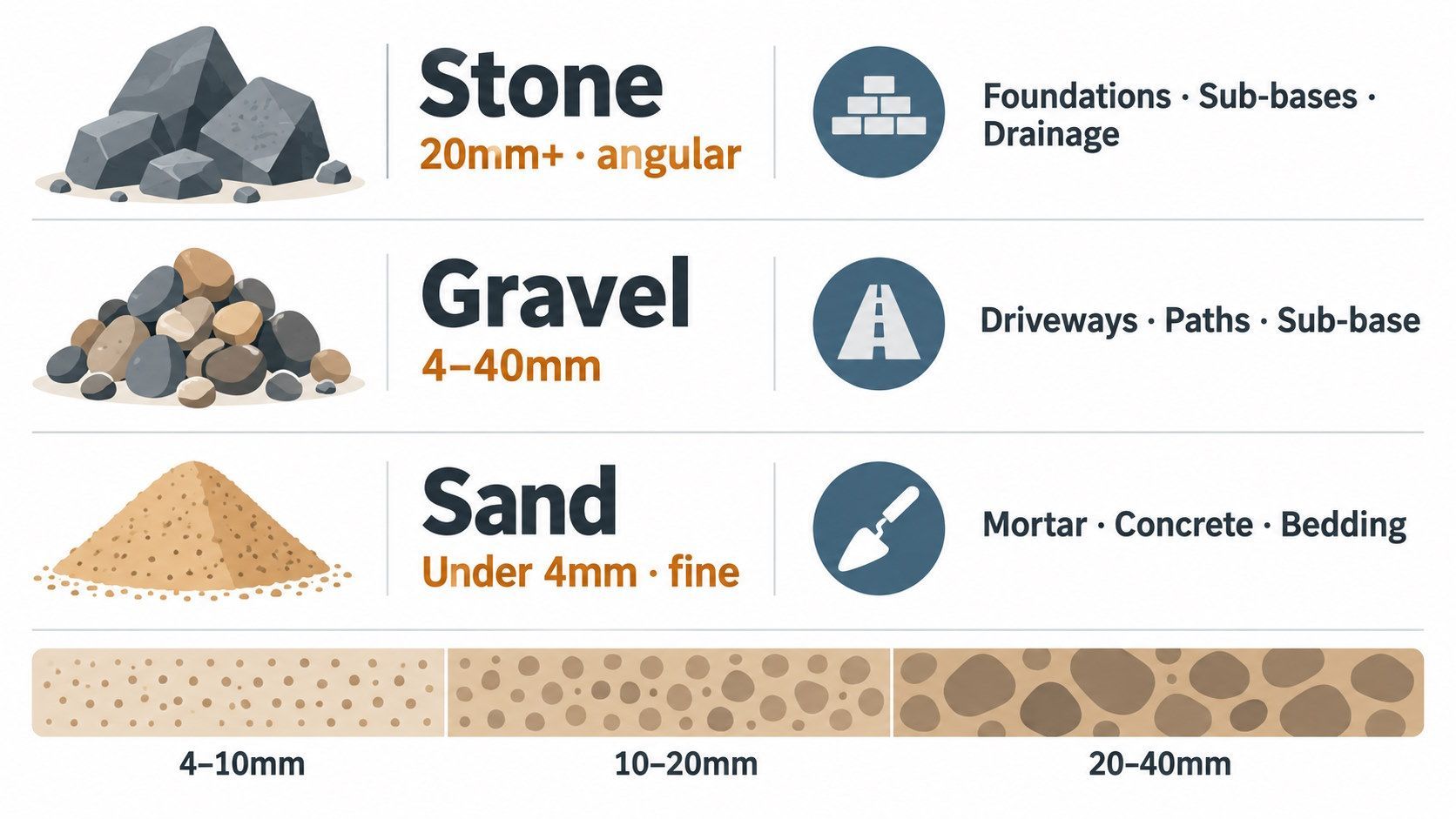
| Stone | 20mm and above | Angular, crushed | Foundations, sub-bases, drainage, decorative fill |
| Gravel | 4–40mm | Rounded or angular | Driveways, pathways, drainage layers, sub-bases |
| Sand | Under 4mm | Fine granular | Mortar, concrete, rendering, bedding, play surfaces |
Stone, sand and gravel are three different aggregates, graded and used in different ways: stone provides structural strength, sand binds and fills, and gravel offers a versatile, well-draining surface. Choosing the wrong one, or the wrong size, is one of the most common (and most expensive) mistakes on a construction or landscaping project.
This guide explains the difference between stone, sand and gravel, how rock quarry gravel sizes affect performance, and how we help trade and domestic customers across Glasgow, Dumbartonshire and Lanarkshire choose the right material sand and gravel combination for their project.
What's the Difference Between Stone, Sand and Gravel?
Stone, sand and gravel are graded by particle size and shape, which determines how each one performs under load, in drainage, or as a finished surface.
Because each material sand and gravel type behaves differently once compacted or mixed, matching the right one to the job is the first step towards a surface or structure that lasts.
Stone: Strength and Structure
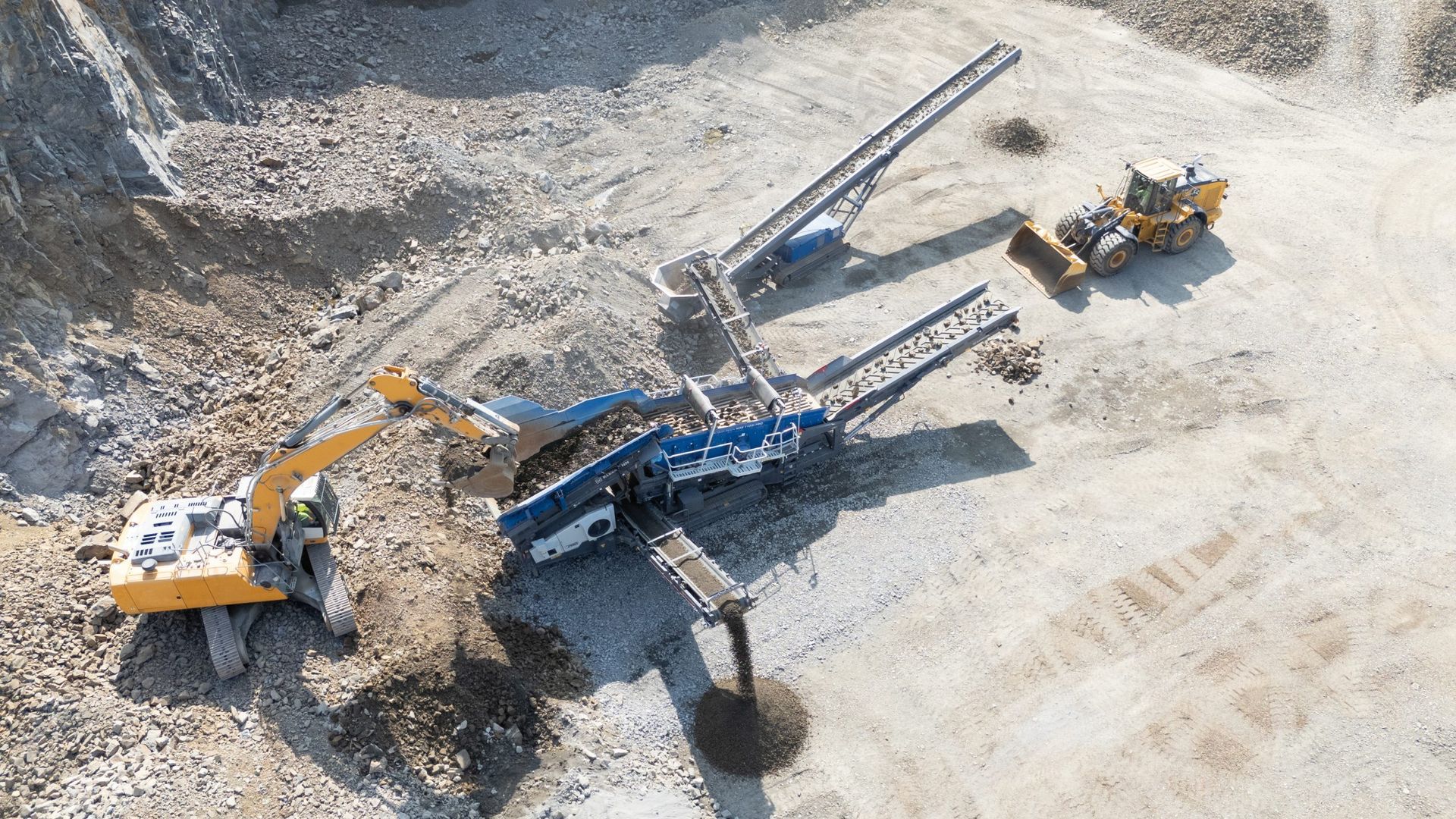
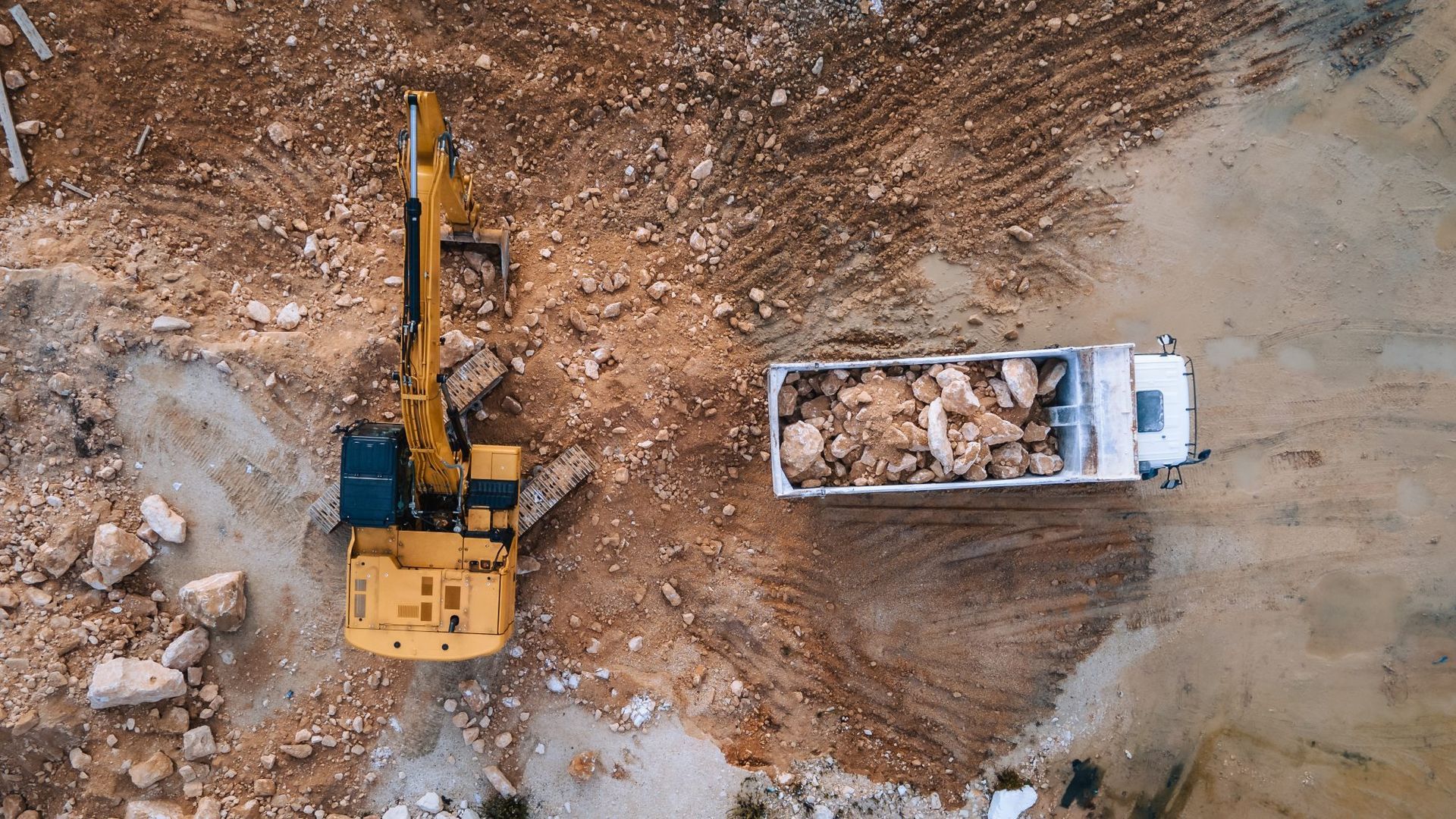
Crushed stone is the material of choice wherever load-bearing strength matters. Quarried directly from natural rock, it compacts to form a stable base for foundations, road sub-bases and hardcore fill, and it's also widely used in drainage systems, gabion walls and decorative landscaping.
Larger, angular stone interlocks tightly and is ideal for stability under heavy loads. Smaller crushed stone compacts more easily and is commonly used as a sub-base layer beneath tarmac or paving.
Sand: The Fine Detail
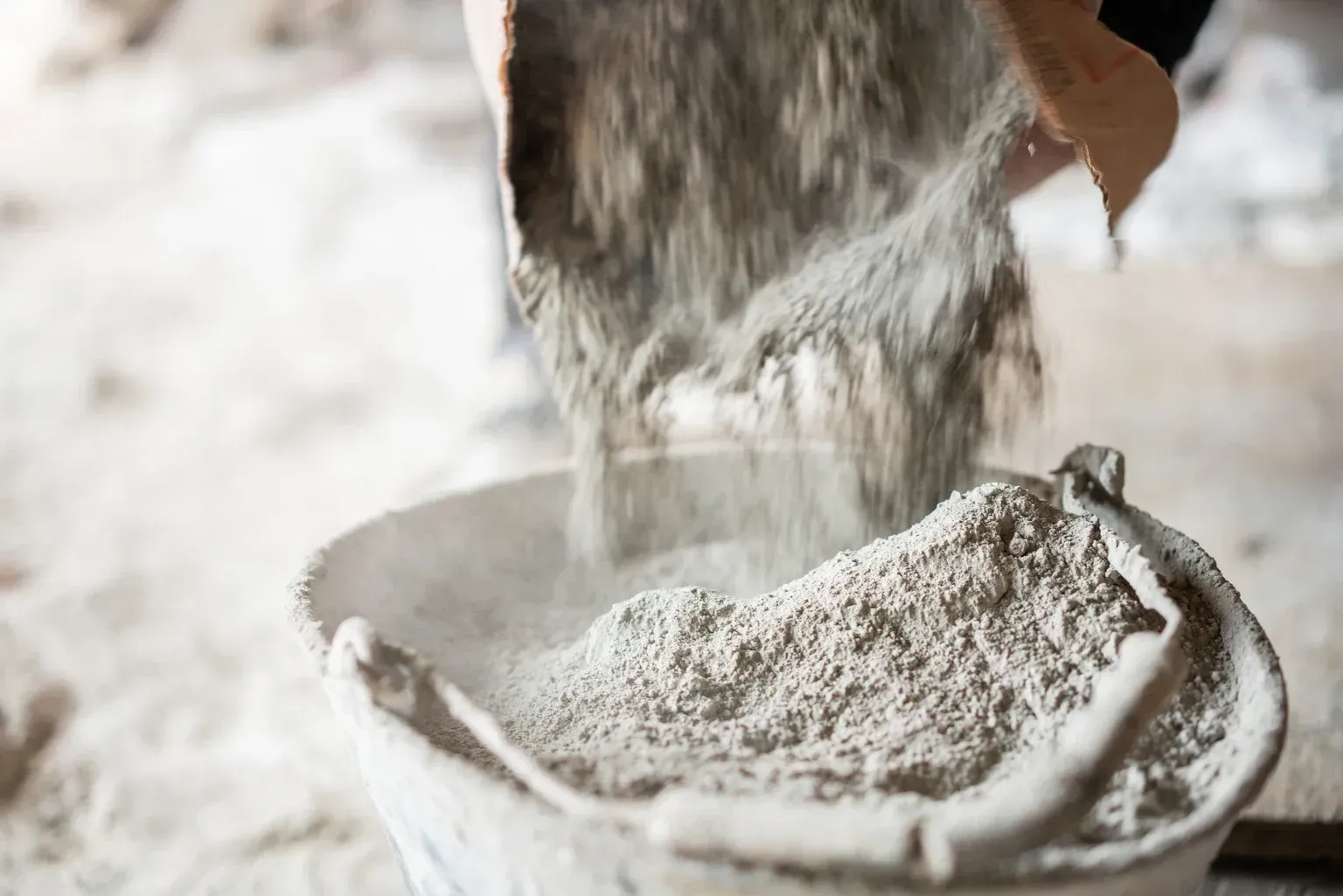
Sand binds materials together, fills gaps between larger stones, and creates smooth, even surfaces. The type you need depends on the job.
Building sand is soft and fine, making it the natural choice for mortar, rendering and bricklaying. Sharp sand, by contrast, has coarser, more angular grains, which gives it the strength and drainage properties needed for concrete mixes and drainage layers. Graded sand has been screened to a uniform particle size, offering the consistency required for concrete production, asphalt manufacture, and play or equestrian surfacing.
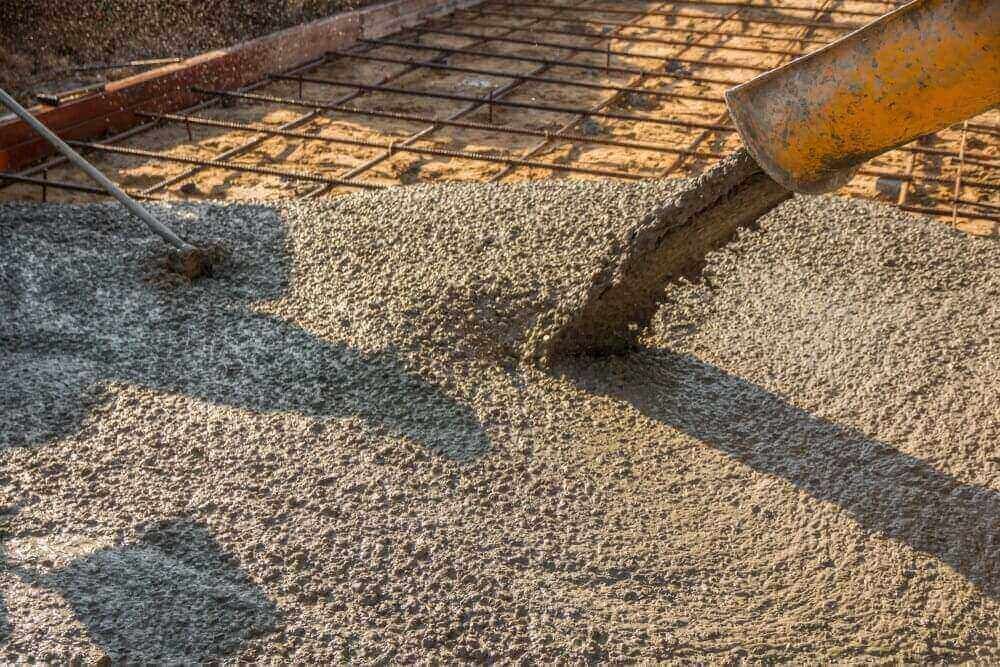
Graded sand deserves a special mention, as its consistency makes it invaluable for projects where precision matters. Unlike general-purpose sand, graded sand has been processed to remove oversized particles and impurities, resulting in a uniform product that behaves predictably in a mix. Because we produce our own ready-mixed concrete on-site, we understand exactly how important graded sand is to the quality of the finished product, and we apply the same rigour to every batch of aggregate we supply.
Gravel: Versatile and Practical
Gravel sits between stone and sand, and its versatility makes it one of the most widely used aggregates for both trade and domestic projects. Loose gravel creates an attractive, low-maintenance driveway or pathway; compacted gravel forms a stable sub-base for patios, sheds and outbuildings; and its irregular shape allows water to drain through freely rather than pooling on the surface.
Sand-rock gravel blends, where gravel is combined with sand and smaller stone fragments, create a well-compacted, self-binding surface. These blends work particularly well for driveways and informal parking areas, where a firm but permeable finish is needed.
Rock Quarry Gravel Sizes Explained
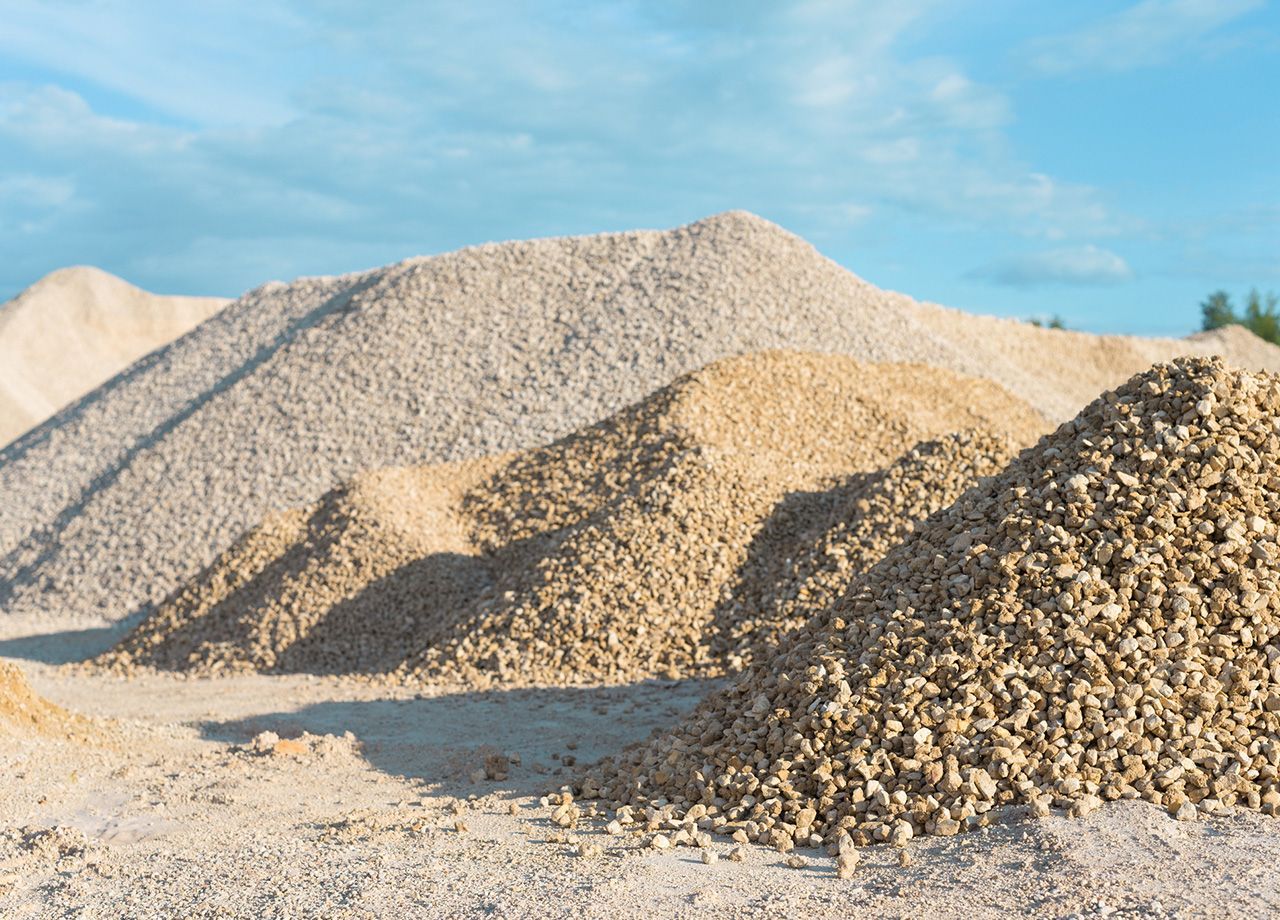
Gravel size determines how tightly it compacts, how well it drains, and how it looks once laid. Smaller gravel compacts more tightly for a smoother finish; larger gravel drains better but leaves a looser surface underfoot.
| Gravel size | Common use |
|---|---|
| 4–10mm | Decorative borders, garden paths, driveway top-dressing |
| 10–20mm | General driveways, drainage layers, informal parking |
| 20–40mm | Sub-base layers, land drainage, heavy-duty applications |
If you're unsure which rock quarry gravel size suits your project, our team can talk you through the options based on your ground conditions and intended use.
It's also worth thinking about how a material will behave once it's in the ground or laid on the surface, rather than just how it looks in a bag or on a delivery ticket. Stone that's too large for the application can leave voids beneath a surface, leading to settlement over time. Sand that's too fine for a concrete mix can weaken the cured strength. Gravel laid without a proper sub-base can shift and rut under vehicle weight within a single season. None of these problems are difficult to avoid, but they do rely on getting the specification right from the outset, which is exactly why we talk through ground conditions and intended use with every customer before a delivery goes out.
Choosing the Right Material for Your Project
The right choice of stone, sand or gravel depends on three things: what the material is for, how much weight or footfall it needs to bear, and what finish you want.
Trade customers typically need materials specified to exact technical requirements, such as a sub-base for a new development or graded aggregate for a concrete batching plant. Domestic customers are more often looking for a material that looks good, drains well, and doesn't need replacing every couple of years.
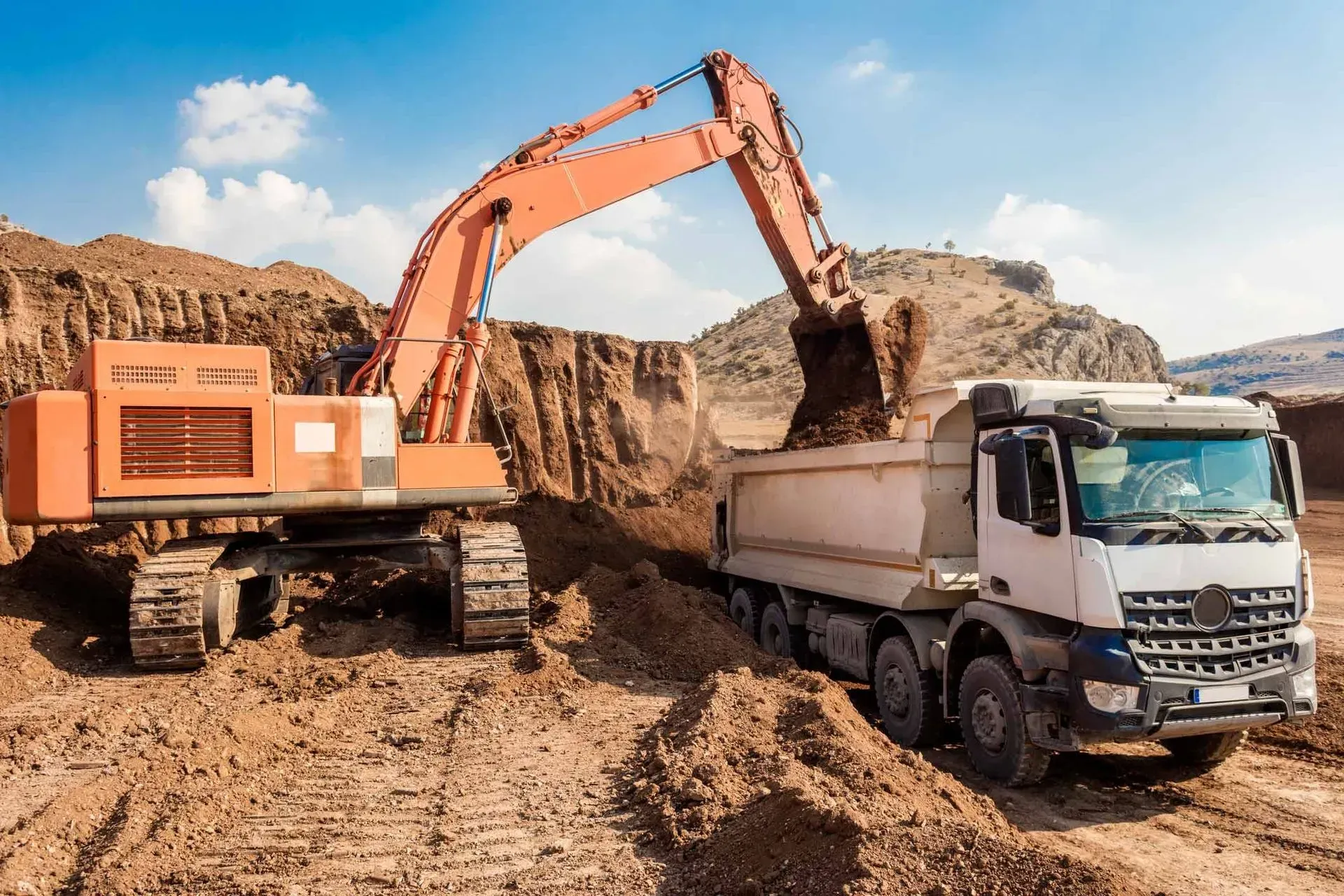
Delivery and timing matter too. Bulk loads of gravel or crushed stone need adequate site access for haulage vehicles, while smaller domestic orders may only need a single kerbside drop. Many landscaping and construction jobs are also weather-dependent, so working with a supplier who can respond quickly when conditions are right can be the difference between finishing on schedule and losing valuable working days.
How We Help You Choose
At William Thompson & Son, we supply natural stone, sand, gravel and graded aggregates from our Dumbarton site to customers across Glasgow, Lanarkshire and beyond. With more than 70 years of experience as a family-run business, we help customers specify the right material the first time, whether that's a bulk order of rock quarry gravel for a large-scale development or a small quantity of graded sand for a DIY project.
We combine decades of quarrying expertise with modern, efficient plant, including our Cat 972M XE wheel loader and Cat 336EL hybrid excavator, and we produce our own ready-mixed concrete on-site, so we understand exactly how graded sand and aggregate quality affect the finished product.
Frequently Asked Questions
What is the difference between stone, sand and gravel?
Stone is a coarse, angular aggregate over 20mm used for structural strength; gravel ranges from 4–40mm and is used for driveways, drainage and sub-bases; sand is under 4mm and is used to bind, fill and bed other materials.
What size gravel is best for a driveway?
10–20mm gravel is generally best for driveways, as it compacts well while still allowing water to drain through the surface.
What is graded sand used for?
Graded sand is screened to a uniform particle size and is used in concrete production, asphalt manufacture, and play area or equestrian surfacing, where consistency is essential.
Can gravel and sand be mixed together?
Yes. Sand-rock-gravel blends combine gravel, sand and smaller stone fragments to create a firm, self-binding, well-draining surface, commonly used for driveways and informal parking areas.
Do I need different materials for trade and domestic projects?
Not necessarily different materials, but often different specifications. Trade projects usually require materials graded to precise technical standards, while domestic projects prioritise appearance, drainage and long-term durability.
Get in Touch
If you're not sure which material sand and gravel combination is right for your project, we're here to help.
Contact our team today on 01389 762271 or email info@thompsonquarries.co.uk, and we'll help you choose the right aggregate for the job, delivered when and where you need it.